
What Colors Are Autumn Colors? A Guide to the Autumn Color Palette for Eyewear and Style
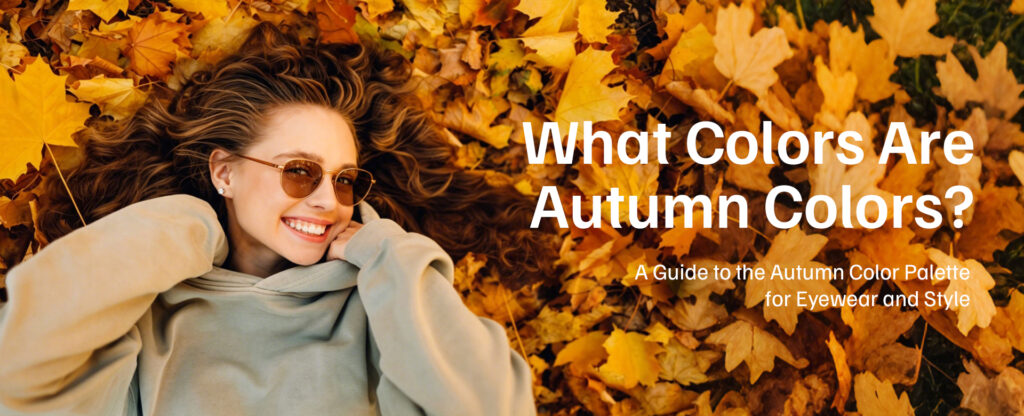
You have probably tried black glasses because everyone said black goes with everything. Then you put them on and looked in the mirror, and instead of feeling polished, you looked drained. Your skin seemed sallow. Your eyes looked tired. You blamed the lighting, the mirror, or your face. The truth is simpler than all of that. You are an Autumn, and Autumn does not wear black. Once you understand what the autumn color palette actually contains and why it works for your specific coloring, you will never wonder why black frames look terrible on you again.
What Are Autumn Colors in Seasonal Color Analysis
In seasonal color analysis, Autumn is one of the four main groups, positioned opposite Spring and sharing warmth with it while differing entirely in intensity. Autumn colors are warm, rich, and muted. They are the colors of a landscape in October: the deep rust of fallen leaves, the golden brown of wheat fields, the olive green of late-season herbs, the burnt orange of pumpkins. These hues carry depth and earthiness rather than brightness or clarity.
The autumn color palette is fundamentally different from the other warm season, Spring. Spring colors are warm but clear, bright, and fresh, like coral, peach, and golden yellow. Autumn colors are warm but deep, muted, and earthy, like rust, mustard, olive, and camel. If you put a Spring coral next to an Autumn rust, the Spring color feels light and luminous while the Autumn color feels grounded and substantial. Autumns look their best in colors that have been warmed by yellow undertones and softened by a muted, dusty quality. Bright, saturated colors overwhelm them. Cool, blue-based colors drain them. Black, the coldest and harshest of all, makes them look ill.
Autumn personal color applies to people whose natural coloring carries these same qualities of warmth and richness. Autumns typically have warm undertones in their skin, often described as golden, peach, bronze, or olive. Hair tends to carry warm highlights: red, auburn, chestnut, golden brown, or warm dark brown. Eyes are often warm brown, hazel, olive green, or golden amber. The overall impression is one of depth and softness, never stark contrast or icy clarity.

The Three Types of Autumn: True Autumn, Soft Autumn, and Dark Autumn
The Autumn season contains three subcategories, each with its own specific color tolerances. Misunderstanding these subcategories is a major reason some warm frames still do not look right on you. You might be picking Dark Autumn colors when you are a Soft Autumn, or True Autumn colors when you need more depth.
True Autumn, also called Warm Autumn, is the purest expression of the season. There are no cool characteristics. The warmth is unmistakable and dominant. True Autumns have golden, bronze, or olive skin tones with rich, warm hair and eyes. The True Autumn palette features the classic earthy shades: rust, terracotta, burnt orange, mustard yellow, olive green, warm teal, and deep gold. Neutrals include camel, warm beige, chocolate brown, and cream. True Autumns should strictly avoid cool-toned colors like black, white, navy, and icy pastels, all of which make their skin appear gray or sallow.

Soft Autumn sits at the border between Autumn and Summer. The coloring is still warm-dominant but carries a subtle coolness that makes this the most muted of the three Autumn types. Soft Autumns have the lowest contrast of the season, with features that blend gently rather than standing out from one another. Skin may appear slightly neutral rather than obviously golden. Hair is often ashy brown or mousy with subtle warmth. The Soft Autumn palette includes dusty peach, muted olive, soft rose, warm mauve, and cocoa. Neutrals include soft beige, warm gray, and mushroom. Soft Autumns can borrow some colors from the Summer palette, particularly muted, dusty tones, but they should avoid anything fully cool, bright, or dark.
Dark Autumn, also called Deep Autumn, borders Winter. This is the darkest and richest of the Autumn types, with high contrast between features. Dark Autumns often have dark hair, deep brown or olive skin, and intensely warm eyes. The palette features the deepest warm colors: burgundy, plum, forest green, deep teal, dark chocolate, and cranberry. Black is actually tolerable for Dark Autumns in a way it never is for the other two subtypes, though soft black or charcoal is still better than stark jet black. Neutrals include dark brown, charcoal, and warm navy. Dark Autumns should avoid light, bright, or pastel colors, which look insubstantial against their depth.

The Olive Skin Tone Question: Are You Autumn or Winter
Olive skin creates more confusion than almost any other coloring question. Olive skin has green or gray undertones, which can read as either warm or cool depending on the individual. Some olive-toned people are Autumns. Some are Winters. The distinction lies in how the skin behaves with color.
If your olive skin looks noticeably more alive in cream than in white, in rust than in fuchsia, and in olive green than in navy, you are warm-toned and likely an Autumn. If your olive skin handles black well, looks good in jewel tones, and seems to carry cooler colors without looking gray, you may be a Winter.

A practical test involves holding gold and silver fabric or jewelry near your face in natural light. If gold makes your skin look smoother and more even while silver makes you look sallow or gray, warmth is dominant and Autumn is likely. If silver clears your complexion and gold brings out yellow tones you dislike, you lean cool. Olive skin is neutral enough that you may also be able to wear colors from both palettes, in which case you may fall into a subcategory like Dark Autumn that already borders Winter naturally.
Warm Muted Skin Tone Glasses: Why Muted Warmth Matters
The phrase “warm muted skin tone” describes the Autumn complexion perfectly. The warmth comes from yellow, golden, or olive undertones. The muted quality means the coloring lacks the high clarity and saturation found in Spring. This combination explains why Autumns struggle with certain frame colors that seem like they should work.
Bright, shiny gold frames can look disconnected from an Autumn face because the high shine introduces a clarity that Autumn coloring does not possess. Brushed brass, antique bronze, or darkened gold with a matte or satin finish integrates with the skin far more harmoniously. The same principle applies to other frame materials: the finish should feel earthy and textured rather than polished and reflective.

Black frames, the most common eyewear choice, are a Winter color through and through. Black is cool, stark, and high contrast. On an Autumn, whose entire coloring is warm, muted, and medium-to-low contrast, black creates a harsh line across the face that draws attention to shadows, unevenness, and dark circles. The frame wears the person, not the other way around.
The solution is replacing black with the Autumn version of dark: deep brown, dark tortoiseshell, warm charcoal, or espresso. These shades provide structure and definition without the coolness that black introduces. The difference is immediate and often emotional. Many Autumns try on their first pair of deep brown frames and feel like they are seeing their actual face for the first time.
True Autumn vs. Soft Autumn: Identifying Your Subcategory
The difference between True Autumn and Soft Autumn matters because their color tolerances diverge in important ways.
If you are a True Autumn, your warmth is obvious. You tan easily rather than burn. Gold jewelry looks integrated and natural on your skin. Colors like rust, mustard, olive, and terracotta make you look healthy and vibrant. You look visibly unwell in cool, pastel, or icy colors. When choosing frames, you can carry rich, saturated warm colors without them overwhelming you. Deep tortoiseshell, warm amber, olive green acetate, and bronze metal all work beautifully.

If you are a Soft Autumn, your warmth is more subtle. Your skin may appear nearly neutral, and your overall coloring is lower contrast. You may have been confused between Summer and Autumn because you share qualities with both. The key differentiator is that Soft Autumns can wear muted warm colors like dusty peach and soft olive, while Summers cannot wear any warmth at all. For Soft Autumns, frame colors should stay in the muted middle range: soft tortoiseshell with gentle contrast, brushed gold in subtle finishes, warm beige, and muted olive. Avoid the richest, deepest Autumn colors, which can feel heavy against your gentler coloring.
A simple home test clarifies the difference. Hold a rust-colored fabric near your face, then a soft cocoa, then a cool gray. If rust makes you glow, you are likely True Autumn. If soft cocoa looks most harmonious and the rust feels slightly too intense, you are likely Soft Autumn. If the cool gray drains you, you are definitely warm-toned and somewhere in the Autumn family.
Tortoiseshell Glasses for Warm Skin: Finding the Right Blend
Tortoiseshell is often recommended as the universal flattering frame material, but standard tortoiseshell blends can still go wrong for Autumns. Many mass-market tortoiseshell patterns are built on a black or dark gray base with warm flecks added on top. The dark base introduces the same coolness problem that black frames create, and the overall effect can still read harsh against Autumn skin.

The best tortoiseshell glasses for warm skin are those where the base color itself is warm: deep brown rather than black, amber rather than gray, cognac rather than charcoal. These warmer blends integrate with Autumn coloring because every tone in the pattern works with the skin rather than against it.
Look for tortoiseshell described with words like honey, amber, cognac, warm brown, and caramel. Avoid descriptions that emphasize black, dark gray, or blue-toned patterns. For True Autumns, richer tortoiseshell with pronounced amber and gold flecks adds warmth. For Soft Autumns, a more muted tortoiseshell with cocoa and soft beige tones provides gentler contrast.
Rust, Olive, and Camel Frames: The Autumn Wardrobe on Your Face
Rust is one of the most flattering colors for Autumns across all subcategories because it combines unmistakable warmth with a muted, earthy quality. A rust acetate frame brings life to Autumn skin in a way that few other colors can match. For True and Dark Autumns, deep rust frames add vibrancy without brightness. For Soft Autumns, a more muted, dusty version provides warmth without intensity.
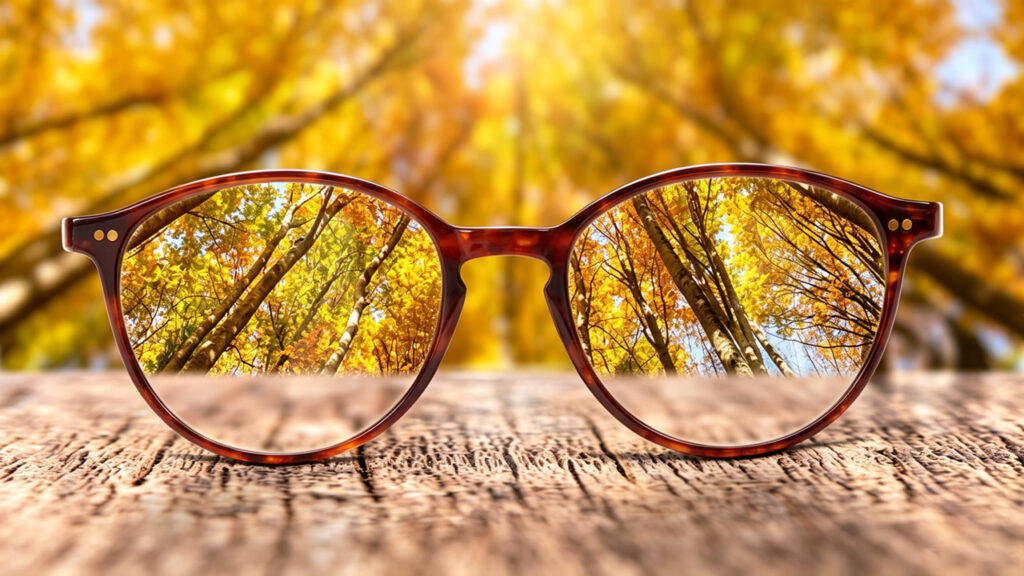
Olive green is another Autumn signature. True and Dark Autumns can wear deep olive green frames that echo the richness of their palette. Soft Autumns should choose a more muted, grayed olive. Olive frames pair beautifully with the neutral colors Autumns tend to wear: camel coats, cream sweaters, brown leather accessories.
Camel and warm beige frames serve as the Autumn equivalent of neutral black frames in other seasons. They provide structure and definition while staying entirely within the Autumn palette. These shades are particularly versatile and suit all Autumn subcategories, though the specific depth should match the individual: lighter, softer camel for Soft Autumns, richer camel and cognac for True and Dark Autumns.

Metal Frame Choices for Autumn Complexions
Yellow gold is often the first metal Autumns reach for, but pure, bright gold can be too shiny and reflective, introducing a cool-adjacent clarity that disrupts the muted warmth of Autumn skin. Brushed gold, antique gold, and satin-finish gold are far more flattering. These matte or textured finishes reduce reflection and integrate more naturally.
Brass offers an excellent alternative for Autumns who want a metal frame with character. Brass has a slightly darker, earthier quality than gold and reads as warm without shine. Bronze and copper are also flattering, carrying the warm, earthy undertones that Autumn coloring requires.
For Dark Autumns, gunmetal with a warm undertone can work as a darker metal option. Silver, platinum, and white gold are generally not recommended for any Autumn subcategory. These cool metals introduce a blue or gray cast that conflicts with the golden warmth of Autumn skin.

Practical Steps to Choose Autumn-Color Glasses
When shopping for glasses, apply these filters before evaluating shape or size.
First, eliminate anything black, stark white, silver-toned, or primary bright. These colors belong to Winter and Spring respectively and will never look harmonious on an Autumn face.
Second, look for frames described with words like warm, earthy, muted, rich, deep, or golden. These descriptors signal the warmth and depth that Autumn coloring requires. Avoid words like bright, clear, icy, cool, or pastel.
Third, evaluate tortoiseshell carefully. Check whether the base color reads as brown or black. A warm brown base with amber and honey flecks works. A black base with yellow flecks on top does not.
Fourth, for metal frames, prioritize brushed, satin, or antique finishes over polished, shiny ones. Hold the frame near your face and look at your skin, not the frame. If your complexion looks smoother, warmer, and more even, the color is correct. If the frame seems to float in front of your face or makes your skin look gray or sallow, move on.
The Right Frames Honor Your Natural Depth

Autumn is a palette of extraordinary richness and beauty, and the glasses that suit it are equally warm and grounded. Deep tortoiseshell, rust, olive, camel, cognac, and warm brown offer options that feel substantial and elegant. Brushed gold, brass, and bronze metals provide alternatives to acetate. Warm translucent frames in amber or honey add lightness while staying within the palette.
When you stop forcing your face into frames designed for cooler seasons and start choosing glasses that work with your natural warmth and depth, the change is transformational. You stop looking tired. Your skin looks healthy. The glasses feel like they belong on your face because they finally do. That is what autumn color glasses are supposed to do.